

We are early.
The gates to the International Crane Foundation (ICF) won’t open for another hour, but we are already there — parked just outside the entrance on a cold November morning, waiting for the Great Midwest Crane Fest to begin. The silhouettes of dancing cranes arch overhead in steel, welcoming visitors into a place that has shaped the future of cranes for more than fifty years.
The visitor center is new, with expansive spaces for educational presentations and interpretive exhibits. Outside, enclosures that house all the world’s 15 species of cranes are enhanced with artistic murals depicting the environment in which these cranes live.
Flashback to 1973, when the idea of the ICF was hatched. It was originally housed on a former horse farm outside Baraboo, when George Archibald and Ron Sauey founded what would become the world’s only nonprofit devoted entirely to cranes. The Eastern sandhill crane population has increased ten-fold, but 10 of the world’s 15 species remain endangered. Now, the ICF works worldwide to conserve cranes and the ecosystems, watersheds, and flyways on which they depend. Through partnerships around the globe, ICF works with a network of hundreds of specialists in over 50 countries on five continents.
For two days, we hear from these crane specialists, meet fellow “crainiacs,” visit the nearby Aldo Leopold Foundation, and search for cranes.
George Archibald
Then we meet George.
George Archibald is humble, gracious, and still unmistakably devoted to the birds that defined his life’s work. He finds time to talk with us about the early days of crane research when he welcomed young researchers – Ron, John, fellow researcher Scott Melvin, and many others – into the scientific ecosystem that was taking form in the United States
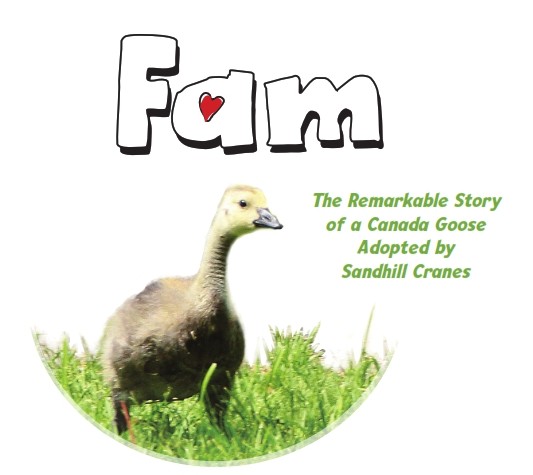
George is clearly interested in hearing about our experiences with Fam. We sign a copy of our book, and he gives us an autographed copy of his memoir, My Life with Cranes.
Though published in 1991, the book reaches back to the fragile early years of crane conservation — the 1970s — when several crane species hovered close to extinction and much of the work was experimental, improvised, and driven by belief as much as funding.
Those are the same years we are researching to find out what things were like then, what has changed, and what the future holds for sandhill cranes.


Wisconsin, late 70s…
By 1978, the International Crane Foundation was establishing captive breeding protocols that would change the trajectory of endangered crane species worldwide. Whooping Cranes — once reduced to a mere handful in the wild — were being carefully managed, studied, and protected.
The science of crane conservation was young. The stakes were high. And beyond Baraboo’s barns and research pens, Ron Crete and John Toepfer were following sandhill cranes cross-country to study their behavior.
These efforts were not isolated threads. They were part of a broader awakening — a growing recognition that cranes, their wetlands, and their migratory corridors required coordinated protection.
Paying homage
As we stand at the gate — waiting for it to open — we are fully aware that the research that was started here and the early experiments of the young researchers in the 1970s were part of the groundwork for the global conservation movement we see today.
And when we stand on the banks of the Wisconsin River that night, hearing the prehistoric calls of thousands of migrating cranes as they fly into their roosting spots, we are reminded of the ancient route they were taking.
Ron and John explored this route, mapping it with hand-held receivers, taking photos with film cameras, and documenting them with paper notebooks.
With new tools and no less passion and commitment, a new generation of professionals are advancing science and forging conservation partnerships.
And now, with reverence to these majestic birds and to the dedicated researchers who love them, we are following the sandhill cranes, too.
Sandhill cranes return to their roosts on the Wisconsin River near the Aldo Leopold Center; video by Gary Noren